


Sony Alpha A6700 + 16-50 mm f/3.5-5.6 OSS II


- Reviews 8
- Help and manuals
- Specifications
- Photos & Videos 15
- Alternatives 8
- Accessories and suggested products

Sony Alpha A6700 + 16-50 mm f/3.5-5.6 OSS II
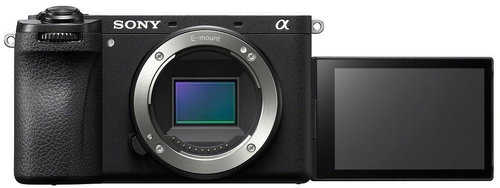
Sony Alpha A6700 mirrorless camera + 16-50 mm f/3.5-5.6 OSS II
A new generation of creativity on the go
The α6700 combines the latest AI technologies with the outstanding image quality of Sony's α series in a compact APS-C camera body. Offering improved object recognition, the latest technology for taking photos and videos and compatibility with E mount lenses, the lightweight α6700 is designed to be used on your creative adventures no matter the time or place.

APS-C
Sensor size
26 Mpix
Sensor resolution
Sony E
Bayonet
IBIS
Image stabilisation
SD / SDHC / SDXC
Memory card
Sony Alpha A6700 Digital Camera Key Features
- Process unit with artificial intelligence
- A new level of image quality
- Five-axis optical image stabilization
- Selectable image size and RAW image quality
- Creative appearance
- 10-bit HEIF images for smooth gradations
- Real-time autofocus human recognition
- Multi-object recognition with real-time autofocus
- Faster, more accurate autofocus system
- Capture more than 1,000 images at high speed
- Precise autofocus in low light (EV -3)
- Continuous focus DMF
- Step up the focus, capture the best images
- Record beautiful 4K videos
- Expressive style S-Cinetone
- S-Log3 gamma curve with more than 14 width steps
- Importing and using custom LUT files
- Smarter real-time monitoring
- 4K 120p high frame rate recording
- Active mode for a more stable cinematic image
- Automatic video composition using artificial intelligence
- Integrated time-lapse video creation function
- Breath Compensation for a consistent angle of view
- Focus tools for shooting video
- High-performance electronic viewfinder
- Shot from all angles
- Intuitive touch control
- Easy and stable connection to the phone
- Stream live content in high quality
- Durable construction
- USB PD (Power Delivery) technology supports fast charging

Performance description, image processing and stabilisation
The α6700's autofocus system delivers improved overall performance thanks to improvements in object recognition. Deep learning technology supports powerful recognition with real-time autofocus and more reliable real-time tracking for a wider range of different objects. The advanced 26.03 effective megapixel CMOS Exmor R image sensor features Sony's image sensor technologies and offers exceptional sensitivity, resolution and dynamic range. All this is combined with the powerful new BIONZ XR processor, which gives the image natural gradation and realistic colour reproduction. When shooting and filming, the camera offers a choice of sensitivity settings from ISO 100 to ISO 32000, giving you even more flexibility to capture a wide variety of scenes, including low-light and indoor scenes. Shoot handheld or in low light without worry. The five-axis optical image stabilization system detects and compensates for various shake. The latest precision gyroscopic sensors enable image stabilization equivalent to a five-step increase in exposure time. This is ideal for long exposure photography such as indoors or night scenes. An improved algorithm detects camera shake at the pixel level, resulting in more effective stabilization than previous models.

Image formats, creative settings and object recognition
In addition to shooting compressed RAW, the α6700 supports lossless compressed RAW, which performs high-speed compression without image degradation. This allows a large number of high quality images to be recorded in a continuous series. The new lightweight image quality option passes on lower data density images for JPEG and HEIF format creation. The creative look offers greater creative flexibility and simplicity. It offers 10 presets that can be used directly or customized to suit the task or scene, for shooting, filming and live streaming. The α6700 is the first camera with an APS-C sensor to support HEIF format with smooth 10-bit gradation, allowing realistic reproduction of the sky and skin tones without banding. The HEIF format uses advanced compression that preserves image quality while significantly reducing file size. The camera uses data about the shape of the object to detect motion, achieving improved capabilities in detecting the human eye. It also uses learned forms of the human figure and postures to refine the recognition of body and head positions. This allows you to focus and track a subject facing away from the camera or with your face obscured by glasses or helmet. In addition to people and animals, the camera can now also recognise birds, insects, cars, trains and planes, offering even more flexibility for photography and video. It recognizes eyes, heads and bodies of human and animal compositions and now also includes ornithological applications.

Autofocus performance, sequential shooting and advanced video functions
The tremendous computing power and enhanced algorithms of the BIONZ XR processor achieve high autofocus performance with up to 759 phase detection points covering approximately 93% of the image area. Deep learning technology supports powerful real-time recognition and tracking with support for fast hybrid autofocus over a wider area. At high-speed shooting, the camera can record more than 1000 JPEG images, up to 59 compressed RAW and up to 23 lossless RAW. The camera shoots smoothly and quietly thanks to a noiseless electronic shutter allowing up to 11 sn. /s in full resolutionwith AF/AE tracking. Autofocus achieves high precision even in low light conditions down to -3 EV. Focus Priority mode provides more reliable focusing in low light or with smaller apertures. When shooting, you can instantly switch to manual focus by turning the focus ring. The camera can automatically take up to 299 images with a progressive shift focus point to create images with great depth of field. The α6700 shoots 4K (3840×2160) video at up to 60p using 6K oversampling and supports XAVC S-I and XAVC HS formats with 10-bit 4:2:2. S-Cinetone profile, S-Log3 curve with more than 14 width steps, the possibility to import custom LUTs in format. cube, Intelligent real-time tracking, 4K 120p recording, active handheld video stabilisation, automatic video composition using artificial intelligence, time-lapse function, lens breathing compensation or focusing tools like focus map and peaking.

Viewfinder, control, connectivity and design
The XGA OLED electronic viewfinder with approximately 2.36 million dots and 1.07× magnification offers high brightness and a 33-degree viewing angle. The refresh rate can be set to 120 sn. /s for smoother motion tracking images. The large 1.03-megapixel LCD 3.0 touchscreen monitor provides a wide range of positioning options for shooting and filming, including low angles and gimbal work. Intuitive touch controls allow you to select the focus point, track the subject, trigger the shutter, as well as display quick icons and the Fn menu using gestures. The α6700 offers a stable connection to your phone via the Creators' App, which allows background photo and video transfer and remote control of the camera. The camera can function as a 4K webcam with advanced autofocus when connected via USB. Durable magnesium alloy construction is designed for harsh conditions, the trigger is tested for over 200,000 cycles and USB PD technology allows for fast charging with up to four times the capacity of previous models.
Photos taken with the Sony Alpha A6700 digital camera


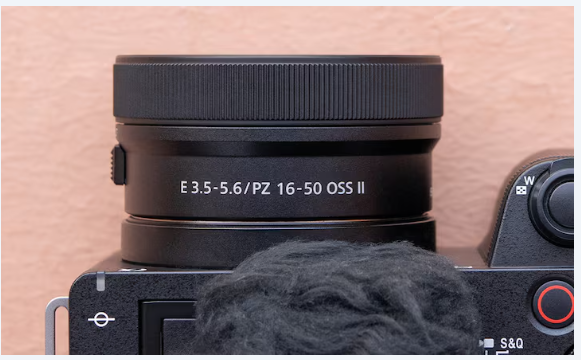
Sony E PZ 16-50 mm F3.5-5.6 OSS II
A great everyday APS-C lens for stills and video
16-50mm lens (equivalent to 35mm Full-Frame: 24-75mm) with motorized zoom is great for casual shots and videos. It weighs just 107 grams (3.8 ounces) and measures 31.3 mm (1 1/4 inches) when turned off. It has great endurance, better AF ensures reliable focusing even when zooming and built-in image stabilization prevents blur. Supports breath compensation for compatible bodies.

Key features of the Sony E PZ 16-50 mm F3.5-5.6 OSS II
- Compact, lightweight, retractable in the 16-50mm range (equivalent to 35mm Full-Frame format: 24-75 mm) APS-C format lens with motorised zoom
- High resolution, circular aperture with 7 blades for beautiful bokeh and versatile close-up performance
- Compensation for unwanted changes in angle of view, auto focus when zooming and optical image stabilization
- Refined autofocus with reliable tracking that is fast, accurate and quiet
- Combined zoom/focus ring control and separate zoom lever for flexible operation

Excellent optical performance
Innovative optical design with 4 aspherical elements and 1 ED element (extra low dispersion) achieves high resolution in the 16-50mm zoom range (equivalent to 35mm Full-Frame: 24-75 mm). Colour blending is minimal, clarity is high and subtle blur is available. The minimum focusing distance of 0.25m (0.82ft) (wide angle) / 0.30m (0.99ft) (telephoto) and maximum magnification of 0.215× offers versatile performance for close-up shots with attention to detail. With an advanced linear motor and nimble controls, the E PZ 16-50mm F3.5-5.6 OSS II makes it easier to capture photogenic moments of children and animals in motion. Excellent tracking performance is supported by fast continuous 120 sn. /s of the powerful α9 III, as well as high frame rate video shooting in 4K 120p / FHD 240p. Focusing is smooth, precise and very quiet.
Advanced video shooting features
The smooth, silent motorised zoom is ideal for video recording, and autofocus is available even when zooming. The built-in optical stabiliser works with built-in stabilisation including active mode to ensure minimal blurring of videos. Breath control during focusing minimizes angle-of-view shifts to ensure smooth, stable recording. It supports focal length compensation for angle of view changes, and metadata allows compensation during the editing phase. When the camera is off, the E PZ 16-50mm F3.5-5.6 OSS II lens retracts to a length of just 31.3mm (1 1/4 inches). Despite its small size and light weight of just 107 grams (3.8 ounces), it is a durable lens that can withstand the rigors of everyday shooting. The integrated focus and zoom ring allows fast and precise zooming or focusing according to the situation. The motorized zoom is controlled by a zoom lever that allows smooth and constant zoom. The E PZ 16-50 mm F3.5-5.6 OSS II can be combined with 40.5 mm screw-in filters.

Package contents:
Front lens cap ALC-F405S, rear lens cap ALC-R1EM
Technical Specifications:
Bayonet: Sony E
Format: APS-C
Focal length: 16-50 mm
Equivalent focal length (35 mm): 24-75 mm
Optical design: 8 groups / 9 members
Angle of view (APS-C): 83°-32°11
Luminance: F3.5-5.6
Minimum aperture: F22-36
Number of louvers: 7
Minimum focusing distance: 0.25 m (wide-angle) to 0.3 m (telephoto)
Maximum magnification: 0,215×
Filter diameter: 40.5 mm
Image stabilization: SteadyShot optical stabilisation (active mode)
Dimensions: 66 × 31.3 mm (h × d)
Weight: 107 g
Sony Alpha A6700 Digital Camera Review
I've had the opportunity to use the Sony A6700 for about a month now and so far I'm very satisfied and in some areas it has exceeded my expectations. I found my way around Sony's new-to-me user experience very quickly. From the beginning the environment was very intuitive and clear. I am surprised especially by the quality of the video, even in lower light conditions. The resulting video is of very high quality and the ability to shoot to S-log3 at up to 4K 60fps gives plenty of scope for subsequent post-production. Even though I bought the camera primarily for the video, I was not disappointed with the quality of the photos. The photos I took are very sharp with lots of detail. I found his strength in action photography in particular. On the other hand, in night photography, it lags slightly behind the Nikon DSLRs I've used before. As for the included lens (Sony E 18-135mm f/3.5-5.6), it offers the expected quality for its price. The focal length of 18-135mm makes it very versatile. It offers very fast focusing with minimal focus breathing and good optical image stabilization. The only disadvantage I see is the large minimum focusing distance, which makes it not very suitable for vlogging. Read the full review here.
Specifications
Colour
Type and function
Sensor
Video
View-finder
Focusing
Display
Dimensions and weight
Memory and storage
Battery
Colour
Inputs and outputs
Package contents
Lens

Sony Corporation is a Japanese company founded in 1946. Its headquarters is located in Tokyo. Its beginnings were humble. The first product sold under the Sony brand was a transistor radio. It was those radios that played a pivotal role in the company's expansion in the 1960s and the world quickly began to associate Sony products with a reliably stellar price-performance ratio.
In the 1970s, Sony was severely affected by the global economic crisis. Many analysts considered the company effectively defunct and could see no future for it. However, they underestimated the famous Japanese perseverance and courage. The crisis was not a disaster for Sony; on the contrary, it served as a launching pad to even greater heights. The company recovered and soon changed the media landscape with the development of the CD and later the DVD. In the early 1990s, Sony achieved another major success with the introduction of the PlayStation gaming console. It is the gaming consoles that best represent the intersection of the three key areas in which the company operates today – electronics, video games, and the entertainment industry.
Specifications can be changed without notice. Images are for illustrative purposes only.