Try our cookies Alza.cz a. s., Company identification number 27082440, uses cookies to ensure the functionality of the website and with your consent also to personalisage the content of our website. By clicking on the “I understand“ button, you agree to the use of cookies and the transfer of data regarding the behavior on the website for displaying targeted advertising on social networks and advertising networks on other websites.
Alzak icon
Catalogue
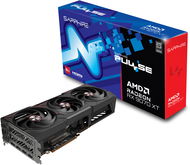
SAPPHIRE PULSE AMD Radeon RX 9070 XT GAMING 16G - Graphics Card

Reviews SAPPHIRE PULSE AMD Radeon RX 9070 XT GAMING 16G

Interested in reviews of SAPPHIRE PULSE AMD Radeon RX 9070 XT GAMING 16G? It got 4.8 out of 5 stars from our customers. Find specific customer reviews of SAPPHIRE PULSE AMD Radeon RX 9070 XT GAMING 16G below. We will appreciate if you also share your experiences with SAPPHIRE PULSE AMD Radeon RX 9070 XT GAMING 16G after purchasing.
670.90 €
In stock > 5 pcs
Add to Cart More Information

User Reviews

Anonymous customerflag
Rated 16/04/2026, variant SAPPHIRE PULSE AMD Radeon RX 9070 XT GAMING 16G
Verified purchase
I was originally thinking about the 5070 ti (upgrade from the 3080 10GB), but it is about 7-10 times more expensive and has similar performance. So satisfied.
price/performance ratio
good cooling - under load about 60c, memory about 80c (Samsung)
2x 8pin connector
FSR 4.1 already looks very good
Adrenaline without problems
Ray tracing (big shift for AMD)
does not light up (a disadvantage for some)
mild coil whine, but it's nothing terrible
0 ×Report
Automatic translation
Customer, Hořovice flag
Rated 07/04/2026, variant SAPPHIRE PULSE AMD Radeon RX 9070 XT GAMING 16G
Verified purchase - review from a price comparison website
The Radeon RX 9070 XT has emerged as a logical extension of AMD's focus on balanced yet powerful high-end graphics cards. It's not a flagship "for the sake of a flagship", but a thoughtful product for those who want to play modern projects in high resolutions without overpaying for extreme class. The manufacturer relies on versatility: Stable performance in Full HD, a solid margin for 1440p and real playability in 4K without constant compromise. In AMD's lineup, this model occupies a position between the conventional "enthusiast tops" and mass-market 1080p-only solutions. The RX 9070 XT is aimed at users who are already looking at high refresh rate monitors or 4K panels, but want to maintain a reasonable balance between price, power consumption and noise levels. Special emphasis is placed on long-term relevance. The RDNA 4.0 architecture, fifth-generation PCIe interface and support for today's image output standards provide years of headroom. This is a graphics card that is not bought "for the season", but as the basis of a gaming system for a long time. Main characteristics and key features The Radeon RX 9070 XT is based on the Navi 48 GPU, a 4-nanometer processor. It includes 4096 stream processors, 256 texture blocks and 128 rasterization blocks. This configuration has a direct impact on high performance in modern games, especially at high graphics settings. The graphics card features 16GB of GDDR6 memory with an effective speed of about 20Gbps and a 256-bit bus. Memory bandwidth reaches up to 640 GB/s, which is especially important for 1440p and 4K, where the load on the texture subsystem increases. The amount of video memory is enough not only for gaming, but also for heavy work tasks related to graphics and rendering. GPU frequencies vary over a wide range. The base frequency is around 1660 MHz, and the boost under load can go up to almost 3000 MHz, depending on the specific design and cooling conditions. The power package is claimed to be around 300W, which is well within the limits of modern powerful video cards and does not require exotic power solutions. The RX 9070 XT uses a PCIe 5.0 x16 interface, features state-of-the-art video outputs including DisplayPort 2.1a, and supports current display standards. Physical dimensions depend on the specific version, but on average it is a large graphics card designed for full-size cases with good ventilation. In AMD's lineup, this model occupies a position between the conventional "enthusiast tops" and mass-market 1080p-only solutions. The RX 9070 XT is aimed at users who are already looking at high refresh rate monitors or 4K panels, but want to maintain a reasonable balance between price, power consumption and noise levels. Special emphasis is placed on long-term relevance. The RDNA 4.0 architecture, fifth-generation PCIe interface and support for today's image output standards provide years of headroom. This is a graphics card that is not bought "for the season", but as the basis of a gaming system for a long time. Main characteristics and key features The Radeon RX 9070 XT is based on the Navi 48 GPU, a 4-nanometer processor. It includes 4096 stream processors, 256 texture blocks and 128 rasterization blocks. This configuration has a direct impact on high performance in modern games, especially at high graphics settings. The graphics card features 16GB of GDDR6 memory with an effective speed of about 20Gbps and a 256-bit bus. Memory bandwidth reaches up to 640 GB/s, which is especially important for 1440p and 4K, where the load on the texture subsystem increases. The amount of video memory is enough not only for gaming, but also for heavy work tasks related to graphics and rendering. GPU frequencies vary over a wide range. The base frequency is around 1660 MHz, and the boost under load can go up to almost 3000 MHz, depending on the specific design and cooling conditions. The power package is claimed to be around 300W, which is well within the limits of modern powerful video cards and does not require exotic power solutions. The RX 9070 XT uses a PCIe 5.0 x16 interface, features state-of-the-art video outputs including DisplayPort 2.1a, and supports current display standards. Physical dimensions depend on the specific version, but on average it is a large graphics card designed for full-size cases with good ventilation. Unpacking the RX 9070 XT Buy RX 9070 XT at a discount Architecture and new technologies The RDNA 4.0 architecture is an evolution of previous AMD solutions with a focus on increased efficiency and tighter integration of modern computing units. In Radeon RX 9070 XT, this translates not only into higher raw performance, but also more stable behavior under sustained load. Graphics processor and computing unit design The Navi 48 GPU consists of 64 compute units, each of which combines stream processors, caches and dedicated accelerators. This structure allows flexible load sharing between game and computational tasks. Improved cache handling reduces dependency on memory bandwidth, which has a positive impact on FPS stability. Features of RT cores and ray tracing The RX 9070 XT has 64 hardware units for accelerated ray tracing. It's not a record-breaking performance, but in real-world games it does provide a noticeable boost over previous AMD generations. Ray tracing no longer looks like an "experiment" here: It can be used in a number of projects without a radical drop in performance, especially with the right settings. Neural network technologies and scaling AMD is betting on the development of its own upscaling technologies. The video card supports current versions of FSR, which allows you to increase FPS in difficult scenes without noticeable loss of image quality. While maintaining compatibility with other modern scaling methods, this expands the choice of settings for different games and scenarios. Compatibility and system requirements Radeon RX 9070 XT is designed for modern platforms and performs best when paired with current mid-range and high-end processors. However, the graphics card remains compatible with older systems as long as they meet the basic requirements. Compatibility with platforms and interfaces The PCIe 5.0 interface provides maximum bandwidth, but the graphics card also works seamlessly in PCIe 4.0 slots. This makes it versatile for upgrading existing systems. There are no chipset limitations, the main thing is sufficient CPU performance. Power supply and power requirements A power consumption of around 300W means that a power supply of at least 750W from a reliable manufacturer is recommended for stable operation. The video card uses modern power connectors, and it is important to make sure in advance that the PSU is equipped with the necessary cables without adapters of dubious quality. Physical dimensions and housing Most versions of the RX 9070 XT have massive cooling systems with two or three fans. This requires a spacious enclosure with good air circulation. When installing, it is worth considering not only the length of the graphics card, but also its thickness to avoid conflicts with other components. Energy consumption and thermal regime Radeon RX 9070 XT is one of those graphics cards where performance is directly related to the competent operation of power profiles. AMD has made a notable step forward in this generation: At high peak power, the card behaves predictably and without sudden consumption spikes, which has a positive effect on both temperature and frequency stability. Before going into the details, it is important to understand that the RX 9070 XT's behavior is highly dependent on the load scenario. In games, performance tasks and synthetic tests, power consumption can vary quite significantly. Consumption in games and work tasks In real-world gaming scenarios, the graphics card rarely hits its maximum TGP. In most modern designs, at high and ultra settings, consumption is in the range of about 260-290 watts. In cyber games and less heavy titles, this figure is even lower, which has a positive effect on noise and heating. In workloads such as rendering or AI workloads, the RX 9070 XT can consistently deliver close to the claimed 300W. That said, the card does not exhibit aggressive tottling if the cooling system and case are properly matched. Temperature behaviour under load Under prolonged gaming load, the GPU temperature is typically kept in the 65-75 degree range, depending on the specific version of the graphics card and the quality of the case ventilation. The hotspot may be higher, but remains within acceptable limits. Importantly, even with long sessions, the card does not "float" on frequencies. The boost is stable, without any sharp drops, which indicates a competent power configuration at the architecture level. Impact of energy profiles on performance RX 9070 XT supports multiple power modes. Switching to a more economical profile reduces consumption by 10-15% with minimal FPS loss, especially at 1440p. This makes the card interesting for users who value silence and efficiency as much as absolute performance figures. Cooling system and noise level The cooling system is one of the key factors that determine the comfort of the Radeon RX 9070 XT. Most of the partner versions have been given massive coolers designed specifically for extended periods of high load operation. Before we talk about noise and temperatures, it is worth looking at the cooling design itself, as it directly affects how the graphics card behaves in real-world conditions. Cooler design and cooling elements A typical RX 9070 XT design includes a large heatsink with multiple heatpipes and two or three large diameter fans. Massive wafers and a dense layout are used to efficiently dissipate heat from the GPU and memory. A number of versions use a metal backplate, which not only increases the rigidity of the design but also participates in passive cooling. This is especially noticeable during long gaming sessions. Noise level and behaviour under load Fans often come to a complete stop at idle and light load. In games, the noise level remains moderate and does not fall outside of a comfortable background. Even under maximum load the RX 9070 XT does not turn into a "vacuum cleaner" if a quality version from a well-known manufacturer is used. The noise profile is generally smooth, with no sharp spikes in speed. This is especially important for those who play without headphones or work near a system unit. Working in enclosures with different ventilation In a well-ventilated enclosure, the graphics card feels confident and exhibits better thermal performance. Temperatures may be higher in more compact or poorly ventilated enclosures, but critical problems do not arise if at least basic airflow is provided. The RX 9070 XT is clearly designed for medium to large enclosures, and it is here that its potential for quietness and stability is unleashed. Performance in games and tasks Performance is the main argument for Radeon RX 9070 XT. The graphics card performs confidently at all popular resolutions and shows predictable FPS increases when reducing load or using scaling technologies. Before we get into specific numbers, it's important to note that the results below are an average and may vary slightly by system and graphics card version. Gaming performance in Full HD, 1440p and 4K In Full HD, the RX 9070 XT shows a very high power reserve in literally all games. Forza Horizon 5 runs at around 241 FPS on high settings, 168 FPS on ultra, 150 FPS in 1440p and 112 FPS in 4K. The Witcher 3 shows around 256 FPS in 1080p High, 239 FPS in 1080p Ultra, 172 FPS in 1440p and 92 FPS in 4K. In Counter-Strike 2, the video card is particularly striking: About 315 FPS in 1080p High, 225 FPS in Ultra, 164 FPS in 1440p and 83 FPS in 4K. Far Cry 6 shows around 200 FPS in Full HD, 175 FPS on ultra settings, 159 FPS in 1440p and 101 FPS in 4K. In heavier projects, the numbers remain confident. Hogwarts Legacy is holding at 157 FPS in 1080p High, 134 FPS in Ultra, 103 FPS in 1440p and around 60 FPS in 4K. Call of Duty: Modern Warfare III shows 240 FPS in Full HD, 237 FPS in Ultra, 176 FPS in 1440p and 122 FPS in 4K. Ghost of Tsushima comes in at around 159 FPS in 1080p High, 134 FPS in Ultra, 115 FPS in 1440p and 75 FPS in 4K. Cyberpunk 2077 shows 188 FPS in Full HD, 165 FPS in Ultra, 116 FPS in 1440p and 53 FPS in 4K without upscaling. Shadow of the Tomb Raider reaches 288 FPS in 1080p High, 268 FPS in Ultra, 199 FPS in 1440p and 110 FPS in 4K. The average resolutions look like this: About 227 FPS in 1080p High, 194 FPS in 1080p Ultra, 150 FPS in 1440p and 90 FPS in 4K. RT performance and acceleration technologies With ray tracing, the RX 9070 XT shows marked progress over previous generations of AMD. In a number of games RT can be used at 1440p without a critical drop in FPS, especially when FSR is enabled. In 4K the tracing remains demanding, but with the right settings it becomes quite playable. Performance in work tasks The graphics card delivers solid performance in rendering and computing tasks. Blender, OpenCL tests and AI workloads demonstrate that RX 9070 XT is not only suitable for gaming, but also for serious graphics, video and machine learning work. Graphic and multimedia capabilities In addition to pure performance, the Radeon RX 9070 XT offers a wide range of multimedia capabilities, making it a versatile tool for work and play. Before we get into the details, it's worth noting that AMD has paid particular attention to modern image output and video encoding standards in this generation. Hardware codecs and video handling The video card supports hardware encoding and decoding of popular formats including AV1, HEVC and H.264. This is especially important for streaming, video editing and working with high-resolution content. Hardware acceleration reduces CPU load and speeds up video export in professional applications. Support for monitors and refresh rates RX 9070 XT features state-of-the-art output interfaces and supports high refresh rates in Full HD and 1440p, as well as 4K monitors with advanced HDR capabilities. This makes it an excellent choice for gaming and work configurations with multiple displays. Multi-monitor configurations and VR The video card works seamlessly with multiple monitors simultaneously and is suitable for VR scenarios. The performance margin is sufficient for stable operation in virtual reality, provided that the settings are correctly selected. If you want to continue - write "+" and I will make the next 4 blocks of the article strictly in the same format and style. Overclocking and optimization profiles The Radeon RX 9070 XT leaves room for fine-tuning, and this is one of those cases where smart optimization not only yields FPS gains, but also a more comfortable day-to-day experience. The card initially operates at high frequencies, but the RDNA 4.0 architecture allows for considerable flexibility in managing the balance between performance, temperature and power consumption. Before moving on to specific scenarios, it is important to note that the final result is highly dependent on the specific version of the graphics card, the quality of the chip and the cooling system. Kernel and memory overclocking When manually overclocking the core, most RX 9070 XT instances allow for a 5-8% performance boost without a serious temperature increase. Increasing the memory frequency also has a noticeable effect, especially in 4K where bandwidth is key. Importantly, even with moderate overclocking, the card remains stable in long gaming sessions and does not go into trottling with properly tuned cooling. Underwriting and efficiency gains Undervolting is one of the RX 9070 XT's strengths. Voltage reduction allows you to reduce consumption by 10-15% with almost unchanged FPS. In a number of scenarios, the map becomes noticeably quieter and temperatures drop a few degrees. This mode is especially interesting for users who play in 1440p or use the graphics card in work tasks where stability and silence are important. Automatic modes and utilities AMD proprietary utilities allow you to quickly switch between performance, power saving and balance profiles. For most users, the automatic modes become the optimal choice, as they are already well calibrated to the features of the RDNA 4.0 architecture. Drivers and software ecosystem Software plays a key role in the perception of a graphics card, and for the RX 9070 XT this aspect cannot be ignored. AMD has made significant improvements in driver stability and the speed at which optimizations for new games are implemented over the past few years. Before evaluating the long-term perspective, it is important to consider the state of the drivers at the time of the video card's release and their further evolution. Driver stability at the time of release At launch, RX 9070 XT drivers demonstrate stable performance in most popular games and applications. There are no critical problems that could spoil the gameplay, and minor bugs are fixed quickly enough. Support for APIs and modern technologies The graphics card supports current graphics APIs including DirectX 12 and Vulkan. This ensures compatibility with today's games and gives you a head start for years to come. Support for modern rendering standards also has a positive impact on work tasks. Updates and long-term behaviour AMD traditionally continues to optimize drivers throughout the product lifecycle. Over time, the RX 9070 XT may receive additional performance improvements in select games, making it more attractive in the long run. Radeon RX 9070 XT video card manufacturers and lines Radeon RX 9070 XT is available in a large number of partner versions on the market. This allows you to match your graphics card to your specific requirements - from compact solutions to massive models with enhanced cooling and factory overclocking. The most popular versions include solutions from Gigabyte, ASUS, Sapphire and Acer, which have traditionally been the leaders in build quality and cooling. Among the most common lines are Gaming OC, AORUS Elite, PRIME OC, Pulse, Pure, Nitro and Predator Bifrost. These versions differ in design, size, noise level and factory frequencies, but use the same GPU. There are more than a dozen RX 9070 XT variants on the market, allowing you to find the optimal model for both compact cases and powerful gaming rigs with a focus on silence and cooling. What users are saying - Radeon RX 9070 XT reviews If we summarize the reviews of Radeon RX 9070 XT owners, the picture turns out to be quite coherent and predictable. Users most often remark on the good combination of performance and price, especially compared to competitors in the same class. The card is perceived as a confident solution for 1440p and full 4K without feeling compromised. Separately praise the stability of frequencies under load and the absence of sharp temperature jumps. Even during long gaming sessions the graphics card behaves calmly, without trotting and FPS degradation. The noise level in most partner versions is rated as comfortable, especially in models with massive three-fan coolers. The attitude towards the programme part is generally positive. Drivers rarely cause serious problems, and updates gradually improve compatibility with new games. Among the cons, users most often mention power consumption and the size of some versions, which require a spacious enclosure. Personal experience The Radeon RX 9070 XT gives the impression of a graphics card designed to last a long time without constant compromise. In everyday use, it feels exactly as you would expect from a modern high-end solution from AMD. Use in games The RX 9070 XT performs very confidently in games. At Full HD and 1440p, the power reserve is so great that you can't really think about graphics settings. In 4K, the card requires a little more careful approach to the presets, but in most projects it manages to get a stable and comfortable FPS without the feeling of "hardware stress". It's especially nice that performance remains stable even after several hours of play. The frequencies don't spike, the temperature doesn't go critical, and the cooling system doesn't get noisier with time. Work in professional tasks In work scenarios, the graphics card proves to be a versatile tool. Rendering, video editing and computing tasks are performed quickly and without unexpected constraints. The RX 9070 XT doesn't feel like it's designed solely for gaming - it has serious workload potential. Operation in different enclosures The graphics card performs at its best in a spacious enclosure: low noise, moderate temperatures and stable boost. In more compact systems it is important to think about ventilation beforehand, as the larger versions of the RX 9070 XT like a good airflow. Even under less than ideal conditions, the card remains operational and predictable. Pros and cons The Radeon RX 9070 XT is a balanced graphics card, but like any device, it has its strengths and weaknesses. Strengths The key strength is high performance in modern games, especially in 1440p and 4K. The card offers a large video memory reserve, stable frequencies and good power efficiency for its class. Also worth noting is the support for modern interfaces and multimedia capabilities. Weaknesses Cons include power consumption, which requires a quality power supply. Some partner versions have impressive dimensions that limit the choice of enclosure. In addition, the ray tracing is still inferior to top competitors' solutions in the most severe scenarios. Comparison with competitors The Radeon RX 9070 XT is in an interesting spot in the market where competition is particularly stiff. Comparison with the closest rivals helps to better understand who this graphics card will suit. GeForce RTX 5070 Ti The RTX 5070 Ti benefits from ray tracing and DLSS performance, especially in RT-intensive projects. However, the RX 9070 XT often offers a better price-to-net raster performance ratio, as well as more video memory in a number of configurations.
Good quality.
Great design
AMD is better.
0 ×Report
Automatic translation
Petr, Plzeň 26flag
Rated 31/12/2025, variant SAPPHIRE PULSE AMD Radeon RX 9070 XT GAMING 16G
Verified purchase
Great graphics for the money
Performance in games - ARC riders, Battlefield 6 all at max most of me is hampered by the 144hz monitor. Graphics can handle many more frames
After a long hesitation I switched from nVidia to AMD and I don't regret it
Personally I find it very quiet even under load
Higher consumption
A bit more setup in AMD adrenaline I think nVidia has this better solved
He's heating up enough
In combination with ryzen 7800x3d and 1000w FSP power supply the computer as a whole is such a small direct heater
0 ×Report
Automatic translation
Patrik, Olomoucflag
Rated 15/12/2025, variant SAPPHIRE PULSE AMD Radeon RX 9070 XT GAMING 16G
Verified purchase
After about 10 years of playing on GeForce, I got Radeon again and I don't regret the purchase at all, everything works as it should.
price-performance ratio
GPU temperature 55c under load
is quiet
2x 8pin
brutal performance in COD
drivers complete in Czech
not lit
vram temperature
0 ×Report
Automatic translation
Karel, Tepliceflag
Rated 15/12/2025, variant SAPPHIRE PULSE AMD Radeon RX 9070 XT GAMING 16G
Verified purchase - review from a price comparison website
Team Red!
0 ×Report
Automatic translation
Adam, Prahaflag
Rated 04/12/2025, variant SAPPHIRE PULSE AMD Radeon RX 9070 XT GAMING 16G
Verified purchase
Good temperatures and performance (just slightly lower the power limit and undervolt)
Not lit
Impractical support
0 ×Report
Automatic translation
Vojtěch, Přešticeflag
Rated 25/11/2025, variant SAPPHIRE PULSE AMD Radeon RX 9070 XT GAMING 16G
Verified purchase
Quiet, after undervolt and super temperatures
Coil whine, I've already returned one RX 9070 XT and I couldn't help myself here.
Unnecessarily complicated support in the package
0 ×Report
Automatic translation
Anonymous customerflag
Rated 29/10/2025, variant SAPPHIRE PULSE AMD Radeon RX 9070 XT GAMING 16G
Verified purchase
She acted with quality
Performance in games very good
Cooling also acceptable
With the received piece coil whine audible already at 90-100 FPS, at 150-200 FPS downright squealed. Unfortunately, the lottery for a piece like everywhere
0 ×Report
Automatic translation
Zdeněk, Ústí nad Labem 3flag
Rated 25/09/2025, variant SAPPHIRE PULSE AMD Radeon RX 9070 XT GAMING 16G
Verified purchase
I don't have a single problem of those described by Michael from Brno and I can't agree with the statement that the 5070 is a much better card.
Performance in some applications like 5080
Usually surpasses 5070 ti
At QHD a blast
Surprisingly quiet even under load
Price
Driver stability
2x classic 8 PIN connector
In RT and PT, although there is a huge shift, it's not enough for 5070
Consumption, on the other hand, can be reduced by 20% without noticeably reducing performance. Personally, I have a "650 W Gold power supply". It can thus be operated with a TDP of around 240 W.
0 ×Report
Automatic translation
Anonymous customerflag
Rated 25/08/2025, variant SAPPHIRE PULSE AMD Radeon RX 9070 XT GAMING 16G
Verified purchase
Power
Price
for WQHD ideal
Handles RT
Heats (reconfiguring the fans will solve this)
0 ×Report
Automatic translation
1 - 10 from 22
P-DC1-WEB25

Lieferung an jeden Ort Unterlausbach? Nutze unsere vielseitigen Lieferoptionen! More info »